When you invest in a new cooling system, the ground beneath it matters just as much as the equipment itself. As Atlas, I often remind homeowners that air conditioning in Augusta requires more than choosing the right unit; it also depends on proper site conditions.
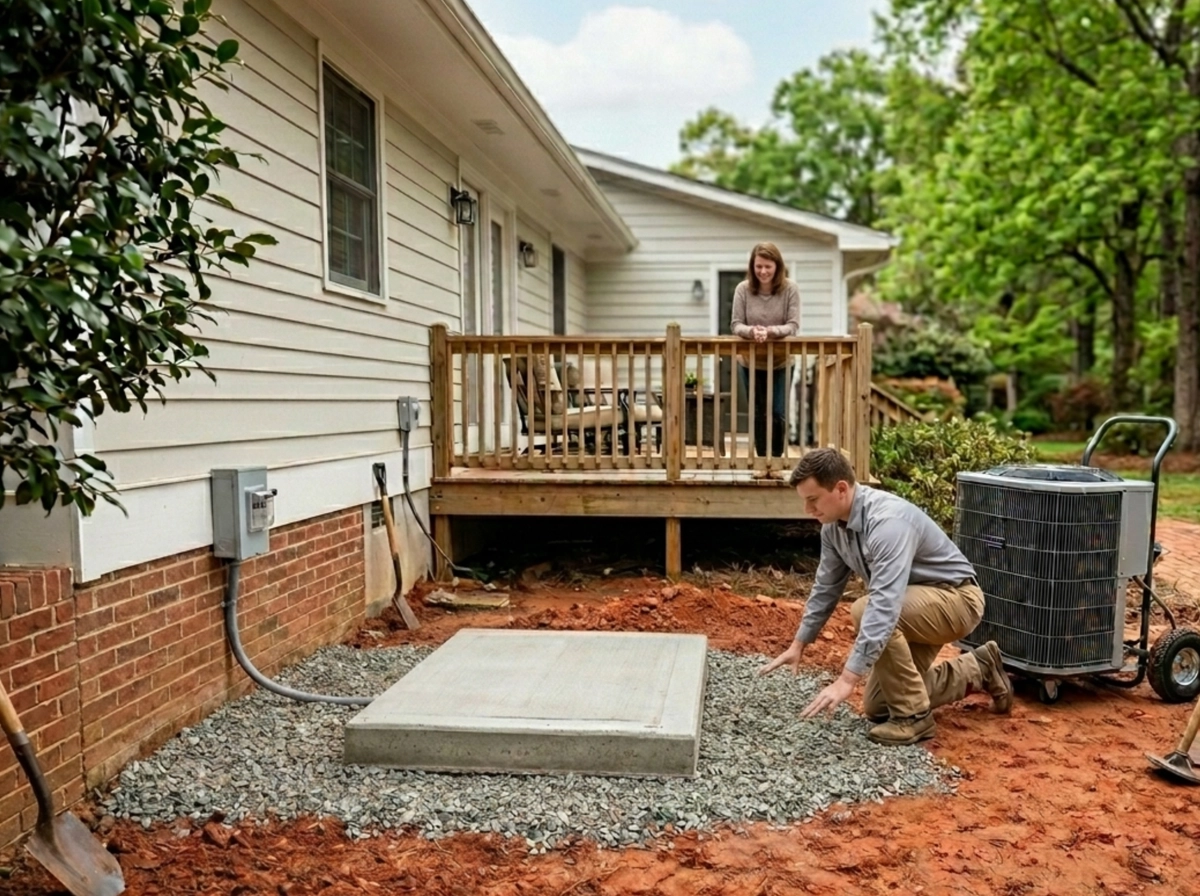
Red Clay Soil Challenges in Augusta
In areas like Hephzibah and Waynesboro, dense clay soil can affect drainage around your outdoor unit and lead to long-term performance issues. That heavy red clay expands when wet and contracts when dry, shifting pads and stressing refrigerant lines over time.
Proper Site Preparation for AC Installation
This topic explores proper site preparation and pad installation techniques that help prevent shifting, pooling water, and premature wear. As your HVAC partner, I focus on ensuring your outdoor condenser sits on a stable, well-drained base designed for Georgia’s challenging soil conditions.
Drainage and Pad Installation Best Practices
Proper drainage planning is critical because water that collects around the outdoor unit can erode the base, reduce efficiency, and shorten the lifespan of your air conditioning system. Before installation, I evaluate soil compaction, slope direction, and runoff patterns so the condenser pad can be positioned to minimize water exposure during heavy Georgia rains. Using reinforced concrete pads or composite platforms, we ensure the system stays level even as clay soil naturally shifts throughout seasonal changes. Routine inspections also help catch early signs of settling, drainage issues, or vibration problems before they turn into costly repairs.
Long-Term Performance in Clay-Heavy Environments
Clay-heavy environments demand more than standard installation practices because soil movement can subtly impact system alignment over time. I always recommend beginning with a thorough site assessment that includes drainage evaluation, grading correction, and moisture control planning before any equipment is set. This upfront attention prevents costly callbacks and ensures that your system performs efficiently even during peak summer heat in Georgia. Homeowners often underestimate how much soil composition influences HVAC longevity, especially in regions with dense red clay common to central and eastern Georgia.
Without proper compaction and leveling, even the best air conditioning equipment can experience vibration, drainage failure, or premature component stress. That is why professional installation teams take extra care to stabilize the base and ensure consistent airflow clearance around the unit. I guide each homeowner through these considerations so they understand how environmental factors directly influence long-term comfort and energy costs. Choosing the right pad material, elevation height, and drainage path can make a significant difference in system reliability over the years. Even small grading errors during installation may lead to standing water, which increases corrosion risk and reduces overall performance.
I encourage clients to think beyond the equipment itself and consider the ground as an active part of system performance. By addressing soil conditions early, we reduce future maintenance needs and improve the overall stability of your HVAC investment. These steps are especially important in regions like Hephzibah and Waynesboro, where clay content is particularly dense and reactive. We approach every installation with a focus on long-term durability, not just immediate cooling performance on day one. That mindset ensures your system stays efficient, stable, and protected against soil-related stress over the long term.
Contact Atlas Heating and Air Conditioning Inc today to schedule your air conditioning installation appointment.
 706-855-7921