
June in the CSRA brings thick, humid air that settles into homes and makes your air conditioner work harder. When that moisture gets trapped inside your HVAC system, it can create the perfect conditions for mold to grow. That matters for indoor air quality in Augusta.
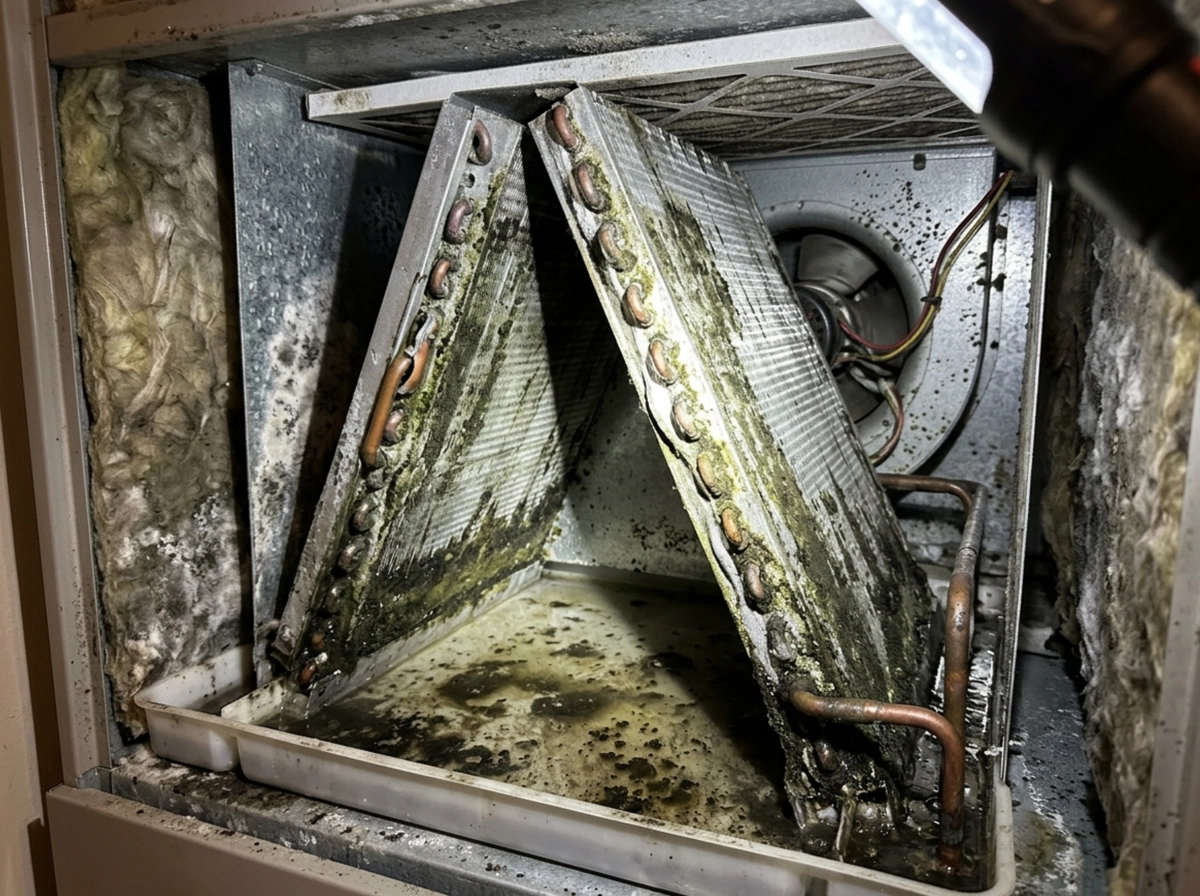
Your HVAC system is designed to cool your home and remove moisture from the air. But when humidity stays high, moisture can collect in places you do not see, including evaporator coils, drain pans, condensate lines, and ductwork. Once mold finds moisture, dust, and a dark space, it can spread quickly.
Where Mold Forms Inside HVAC Equipment
One of the first places mold can form is on the evaporator coil. This coil becomes cold during cooling cycles, and humid air passing over it can leave behind condensation. If the coil is dirty, that moisture mixes with dust and organic debris, giving mold a place to take hold.
Drain pans and condensate lines are also common trouble spots. Your system pulls moisture from the air and sends it away through the drain line. If that line becomes clogged or the pan holds standing water, mold and bacteria can build up and create musty odors.
Ductwork can become another hidden problem area. If ducts are poorly sealed, underinsulated, or located in hot attic or crawlspace areas, humid air can enter and condense inside the system. Over time, that dampness can support mold growth and allow spores to move throughout the home.
How Mold Spreads Through Your Air
When your air conditioner runs, it moves air across the coil, through the ducts, and into each room. If mold is growing inside the system, that same airflow can carry mold spores, musty odors, and microscopic particles indoors.
You may notice a stale smell when the system starts, more allergy-like symptoms indoors, or rooms that feel damp even when the thermostat says the temperature is comfortable. These signs do not always prove mold is present, but they do mean your HVAC system should be inspected.
How Augusta Homeowners Can Prevent HVAC Mold
The best defense is moisture control. Change your air filter regularly, schedule professional HVAC maintenance, and keep supply and return vents open so air can move properly. During Augusta’s humid summer months, your system needs clean coils, clear drain lines, and strong airflow to remove moisture efficiently.
Pay attention to indoor humidity levels. Many homes feel best when the humidity stays between 30% and 50%. If your home feels sticky, smells musty, or shows condensation around vents, your cooling system may not be controlling moisture properly. A properly sized, well-maintained air conditioner helps remove moisture steadily before it has a chance to feed mold growth.
Professional maintenance can catch small problems before they become expensive repairs. A technician can clean key components, check drainage, inspect duct conditions, and recommend solutions if your current system is oversized, aging, or struggling to manage humidity.
If mold keeps returning or your air conditioner cannot keep your home dry, replacing the system may be the better long-term solution.
Contact Atlas Heating and Air Conditioning Inc today to schedule your air conditioning installation appointment.
 706-855-7921